




CHANGER showcases Research Ethics Innovations at WCRI 2026
CHANGER had a strong presence at the 9th World Conference on Research Integrity (WCRI 2026) , contributing to international discussions on research ethics, integrity, and governance through a series of oral and poster presentations. The conference took place on 3-6 May 2026 in Canada, and brought together leading experts, researchers, policymakers, and practitioners from around the world to address emerging challenges in responsible research and innovation.
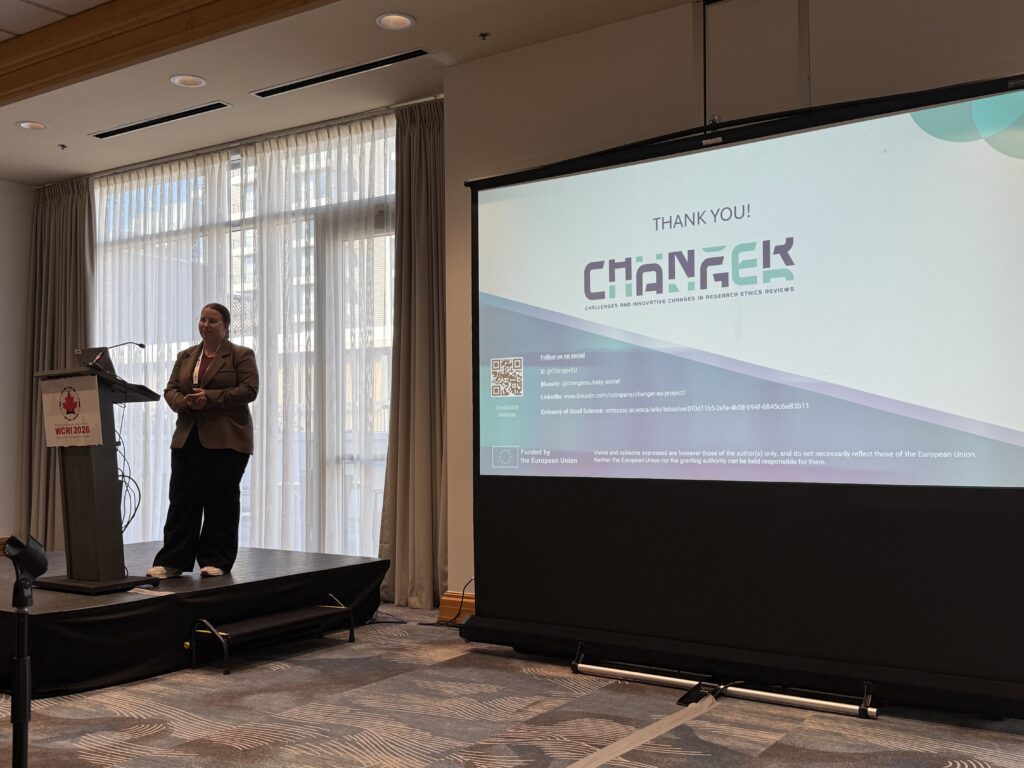
Among the oral presentations, Integrity of Science in Collision with Political Interest: A Challenge in Collaborative Research with Indigenous Communities explored the ethical challenges that arise in socially and politically complex research contexts involving Indigenous communities. Matthias Kaiser (NORSUS) presented on how competing interests can threaten research integrity throughout the research process and highlighted the narrative ethical scenario process developed within CHANGER as a practical tool for identifying and addressing ethical dilemmas. (Integrity of science in collision with political interest: A challenge in collaborative research with indigenous communities. Matthias Kaiser & Marjo Rauhala & Vassiliki Mollaki & Anders Oskal & Svein Diesch Mathiesen, Mimi E. Lam.)
MEFST partner also presented findings from a scoping review examining the ethical and regulatory challenges associated with emerging technologies, including artificial intelligence, digital health technologies, and genomics. The study Challenges to Ethics Review of Emerging Technologies highlighted issues such as limited expertise in emerging technologies, fragmented regulatory frameworks, and the need for more adaptive ethics review processes, while it further introduced the CHANGER Evidence and Gap Map, developed to support the identification of ethical challenges and inform the creation of ethics-by-design tools.
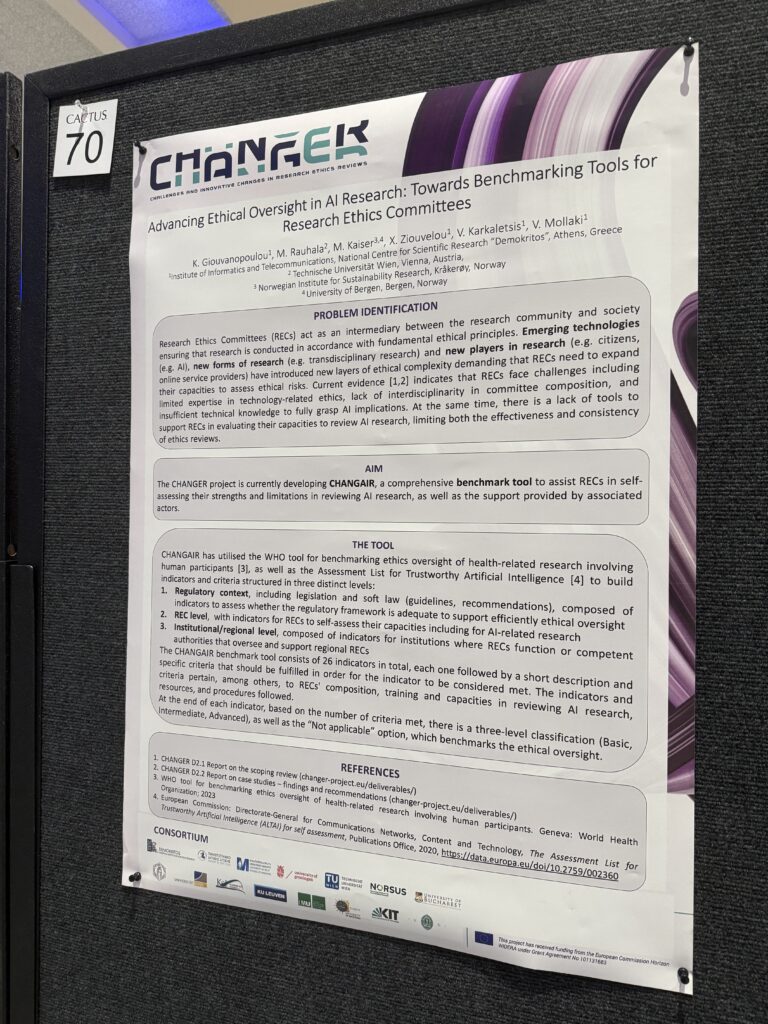
The project’s poster presentations addressed a range of contemporary research ethics challenges. Methodological Innovations in Research Ethics Review: Beyond Compliance examined new approaches to ethics review that move beyond procedural requirements and foster ethical reflexivity (Methodological Innovations in Research Ethics Review: Beyond Compliance. Marjo Rauhala, Matthias Kaiser, Ioannis Manos, Tina Garani-Papadatos, Jonas Pfiste, Konstantina Giouvanopoulou, Xenia Ziouvelou, Vasiliki Mollaki). Advancing Ethical Oversight in AI Research: Towards Benchmarking Tools for Research Ethics Committees focused on the development of benchmarking tools to strengthen the ethical assessment of AI-related research (Advancing Ethical Oversight in AI Research: Towards Benchmarking Tools for Research Ethics Committees. Konstantina Giouvanopoulou, Marjo Rauhala, Matthias Kaiser, Xenia Ziouvelou, Vangelis Karkaletsis, Vasiliki Mollaki).
The poster Fragmented Governance, Ill-Fitting Models, and Limited Resources: The Challenges of Ethics Review in Social Sciences and Humanities in Europe presented by Hella von Unger (LMU), showcased findings from expert interviews and focus groups, highlighting the need for context-sensitive ethics review processes in the social sciences and humanities. The research emphasised the importance of ethics training, peer consultation, community involvement, and greater awareness of SSH-specific ethical considerations among Research Ethics Committees (Fragmented Governance, Ill-Fitting Models, and Limited Resources: The Challenges of Ethics Review in Social Sciences and Humanities in Europe. Hella von Unger, Ioannis Manos, Anna Huber, Nevien Kerk, Antonija Mijatović, Constantin Vică, Alexandra Zorilă, Marija Franka Zuljevic, Marjo Rauhala, Vasiliki Mollaki, Ana Marušić.)
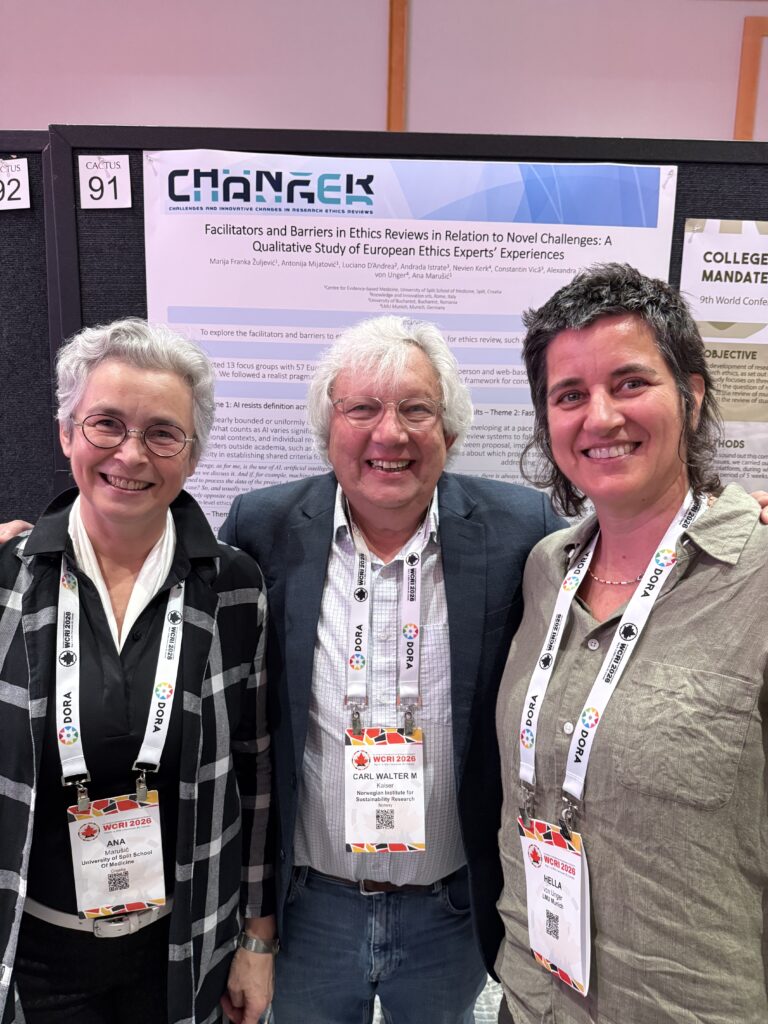
Another poster by MEFST partner, Facilitators and Barriers in Ethics Reviews in Relation to Novel Challenges: A Qualitative Study of European Ethics Experts’ Experiences, presented findings from 13 focus groups involving 57 ethics experts from across Europe. The study examined how ethics reviewers navigate emerging technological challenges, particularly those associated with artificial intelligence, and highlighted the need for interdisciplinary expertise and more flexible, iterative ethics review processes.

The project’s participation in WCRI 2026 reinforced its role in supporting the development of ethical governance frameworks capable of addressing the challenges posed by emerging technologies and evolving research environments.