




CHANGER Trainings: Electronic Informed Consent in Research
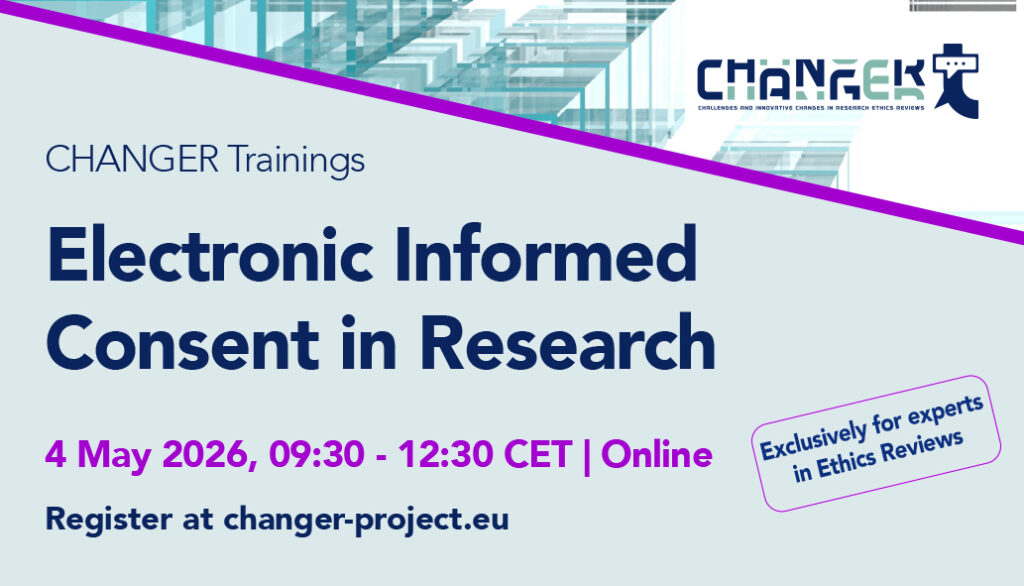
The CHANGER Project is pleased to announce the first upcoming online training session on Electronic Informed Consent in Research, taking place on 4 May 2026 from 09:30 to 12:30 CET.
Designed specifically for experts in Research Reviews, this session will provide a comprehensive introduction to electronic informed consent (e-consent) and its growing role in modern research practices.
Participants will revisit the fundamental principles and requirements of informed consent, while gaining insight into the legal and ethical considerations surrounding e-consent within the European Union. The training will also include a practical case study and interactive group discussion, offering attendees the opportunity to explore real-world applications and challenges.
Agenda of the session:
| Time (CET) | Session | Content | Speaker(s) |
|---|---|---|---|
| 09.30-09.40 | Welcome and Introduction | Introduction to the course | — |
| 09.40-10.10 | General Introduction to Informed Consent | – Definition and main requirements of informed consent – Challenges of traditional informed consent | Alice Cavolo |
| 10.10-11.10 | Electronic Informed Consent (e-consent) | -What is e-consent (10’) – Legal landscape: EU regulations (25’) – Ethical landscape: challenges and solutions (25’) | Janos Meszaros (legal) Pascal Borry (ethical) |
| 11.10-11.25 | Break | — | — |
| 11.25-12.25 | Case Study: Use of e-consent in Research | – Case presentation (10’) – Recommendations (10’) – Group discussions (20’) – Plenary discussion (15’) | Presenter: Alice Cavolo Moderators: Alice Cavolo, Pascal Borry, Kaat Goossens |
| 12.25-12.30 | Closing | Closing remarks | — |
By the end of the session, participants will be able to:
- Explain the core principles and requirements of informed consent in research
- Understand the concept and practical applications of electronic informed consent (e-consent)
- Identify key legal and ethical considerations related to e-consent in the EU context
- Critically assess the opportunities and challenges of implementing e-consent in research projects
Register here: https://us02web.zoom.us/meeting/register/b7xJaA_rSQOQ6f714M3wbA
Kindly note: This event is exclusively for experts in Ethics Reviews and will be recorded. By registering and participating, you consent to being recorded and to having your email added to the CHANGER mailing list to receive project-related updates. Your email will not be shared with external parties and will be used solely for informational purposes related to the CHANGER project.
Meet the speakers:

Alice Cavolo is a researcher at the Centre for Biomedical Ethics and Law (CBMER) at KU Leuven where she obtained her PhD. She holds a Master in Philosophy (Universitá degli studi di Trento) and a Master in Bioethics (KU Leuven). Her research focuses on the ethical aspects of treatment decisions for extremely preterm infants.

Janos Meszaros is a postdoctoral researcher at the KU Leuven’s Faculty of Pharmaceutical Sciences and at the Centre for IT & IP Law (CiTiP) since 2021. His research focuses on data protection, AI, and medical law, with particular attention to the legal framework of clinical trials and digital healthcare. Janos holds a PhD in data protection. He worked at a law firm for two years, focusing on IT and tax law. From 2017 to 2021, he worked at the National Academy of Science in Taiwan as a postdoctoral researcher on the legal aspects of biobanking and AI in healthcare.

Pascal Borry is professor of bioethics at the Centre for Biomedical Ethics and Law (University of Leuven, Belgium). His main research activities are concentrated on the ethical, legal and social implications of innovative technologies. He is member of the Belgian Consultative Committee on Bioethics and member of the Research Ethics Committee of UZ/KU Leuven. He is currently chair of the WADA Independent Ethics Board. He is also chair of the Department of Public Health and Primary Care of KU Leuven since 2020.
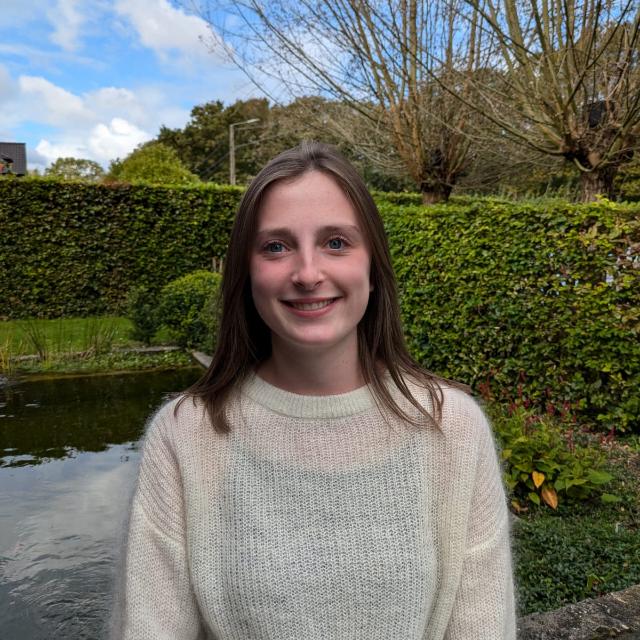
Kaatje Goossens obtained her bachelor’s degree (2022) and master’s degree (2024) in Biomedical Sciences from the Catholic University of Leuven. In October 2024, she joined the Centre for Biomedical Ethics and Law (CBMER) as a research assistant working on the AI-POD project, which focuses on developing AI-based tools to predict obesity-related vascular diseases. Her work within this project centred and centres on the ethical aspects of tool development and stakeholder perspectives. In October 2025, Kaatje was awarded a PhD Fundamental Research Mandate from the Research Foundation – Flanders (FWO), through which she conducts doctoral research on the ethical and practical aspects of post-mortem tissue donation in breast cancer.
This training represents an important step in supporting experts to navigate the evolving landscape of digital research methodologies and ensure ethical standards are upheld in an increasingly electronic environment.
Stay tuned for further updates!