



CHANGER publishes four new review guidelines on emerging technologies in research
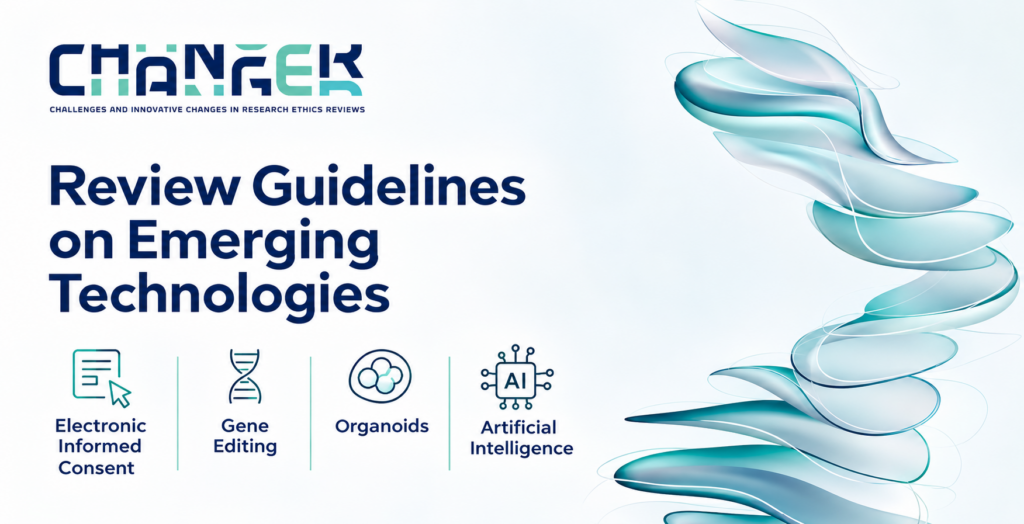
The CHANGER project has developed four new Research Ethics Review Guidelines, providing practical guidance to Research Ethics Committees (RECs), ethics experts, and researchers on addressing the ethical challenges associated with emerging technologies and innovative research practices.
The guidelines aim to support ethical decision-making, strengthen research ethics review processes, and help ensure that scientific and technological advancements are accompanied by responsible research practices.
The four guidelines cover:
- 1. Electronic Informed Consent: Explores the ethical considerations surrounding the use of digital tools for obtaining informed consent in clinical research, focusing on participant understanding, voluntariness, autonomy, and data protection.
- 2. Gene Editing: Addresses the ethical challenges of gene editing technologies, including somatic and germline applications, with particular attention to participant safety, informed consent, and responsible research practices.
- 3. Organoids: Provides guidance on the ethical and regulatory implications of organoid research, including brain organoids and stem cell-based embryo models, highlighting issues related to informed consent, donor rights, and ethical oversight.
- 4. Artificial Intelligence: Examines ethical considerations in both research on AI and research with AI, addressing issues such as algorithmic fairness, transparency, human oversight, safety, accountability, and research integrity.
These guidelines have been developed as part of Work Package 4 (WP4): Innovative Training Material to Address New Challenges in Ethics Reviews and Training, led by partner KU Leuven, contributing to CHANGER’s efforts to strengthen research ethics review practices and equip ethics experts with practical resources to address emerging challenges in research.